

Radiology in
Alberta
Radiologists are doctors who see inside the body
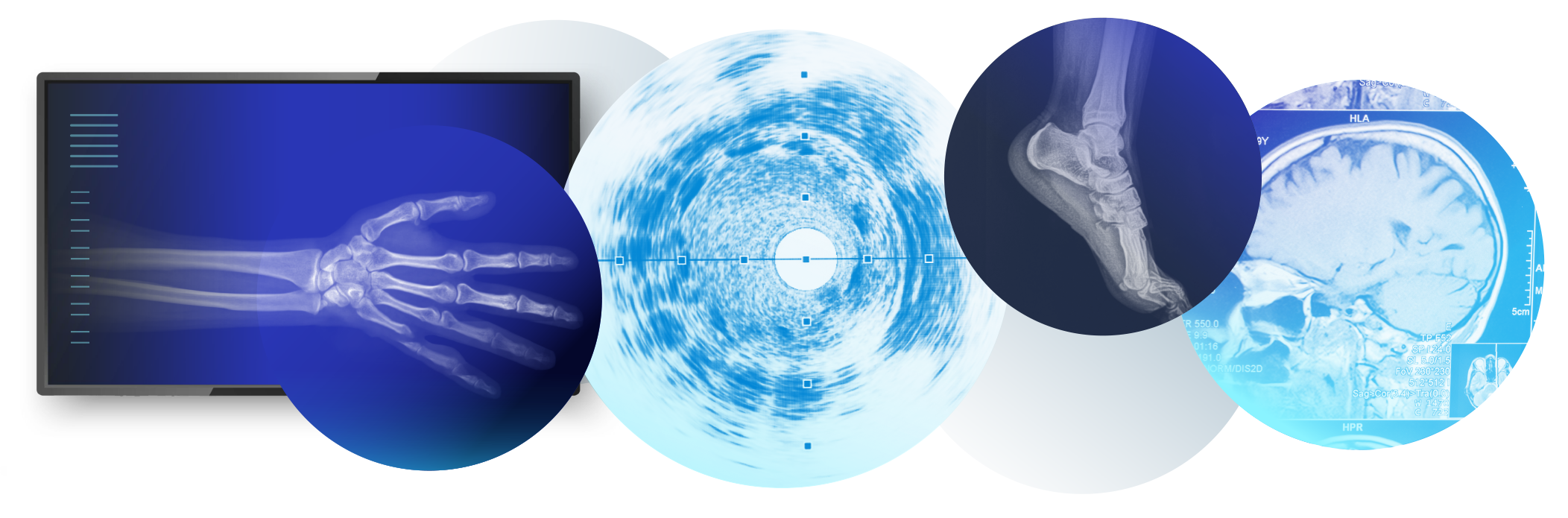
Radiology, also called diagnostic imaging, is central to detecting, monitoring, and treating conditions across Alberta's healthcare system.
When a doctor orders an X-ray, ultrasound, MRI, CT, or mammogram, a radiologist is the physician specialist who reads it and reports the findings back to the referring physician. What the radiologist finds determines what happens next. For some conditions, they also provide the treatment.
Most patients may not interact with their radiologist directly. However, for many patients, a radiologist's report is what determines diagnosis and treatment.
Why radiology matters
Family physicians, emergency teams, oncologists, cardiologists, and surgeons all rely on a radiologist before deciding on next steps. When someone arrives at an emergency room after a crash, a stroke, or chest pain, a radiologist is reading the scan that tells the team how to respond.
Radiologists specialize in:

X-rays are the fastest and most common scan, providing clear views of broken bones, lung problems, and joint pain.

Ultrasounds use sound waves to create live images of pregnancy, the abdomen, blood vessels, and soft tissue.

CT scans layer X-rays into detailed cross-sections, revealing serious injuries, cancer, and internal bleeding.

MRIs produce detailed images of soft tissue, the brain, the spine, and joints, with no radiation.

Screening and diagnostic mammography uses low-dose X-rays of the breast to screen for and investigate breast cancer.

Echocardiography uses ultrasound to show the heart in motion, assessing function, valves, and blood flow.


Nuclear medicine uses a small amount of safe radioactive material to show how an organ is working, not just what it looks like, including the heart, thyroid, and bones.
Bone mineral densitometry (BMD) uses low-dose X-rays to measure bone strength and monitor osteoporosis and fracture risk.

Pain management/fluoroscopy uses real-time X-ray guidance to precisely deliver injections for diagnosis and relief of musculoskeletal and nerve pain.

Image-guided procedures are biopsies, injections, and treatments where the radiologist watches a live scan to place a needle or instrument exactly where it needs to go.

Interventional radiology uses scans to guide tiny tools through the body to stop internal bleeding, open blocked blood vessels, and treat cancer without major surgery. Recovery is faster, with fewer complications and shorter hospital stays. Delivered at Alberta Health Services facilities.
Alberta radiologists work in both community clinics and hospitals.

They are on call around the clock, in cities and smaller communities across the province. They live and work in Alberta, alongside the physicians who refer their patients to them.
Learn more about radiology in your community.
Find a clinic near you
Independent radiology clinics operate across Alberta, from Fort McMurray to Pincher Creek. Search by service and location to find one in your community.